


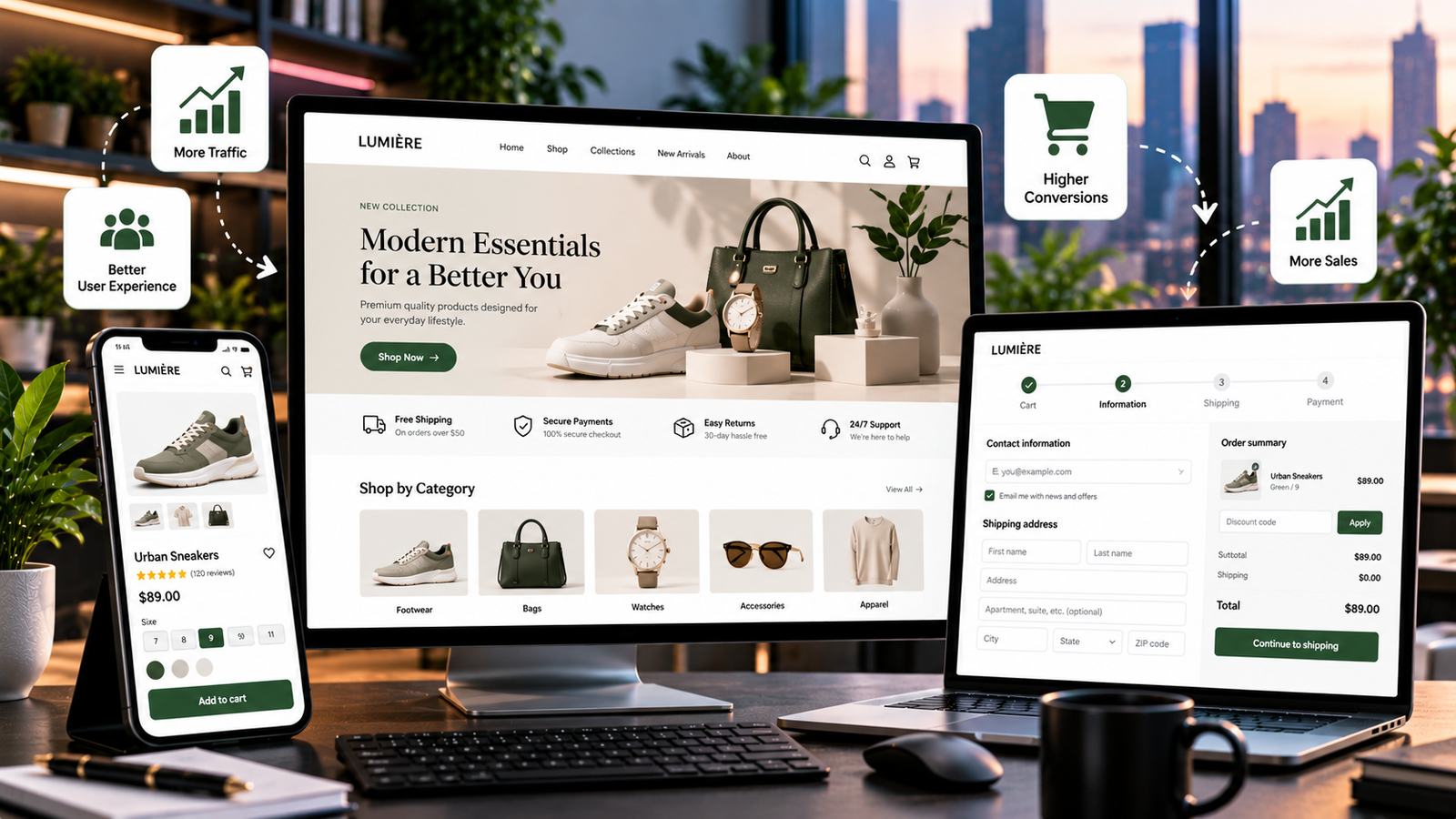
A successful eCommerce website needs to do more than look professional.
It needs to help the right customer move confidently from first visit to completed purchase.
That is what separates a visually attractive online store from a high-converting eCommerce website.
Many businesses focus heavily on design, products, and advertising but overlook the buying experience itself. If navigation is confusing, product information is weak, the mobile experience is poor, pages load slowly, or checkout creates unnecessary friction, even good traffic can fail to turn into revenue.
The strongest eCommerce websites are therefore built around the complete customer journey, not just individual pages.
Your Website Has to Build Confidence Quickly
Online customers make decisions fast.
When someone lands on your store, they should quickly understand what you sell, why it is relevant to them, and whether they can trust the business.
That confidence is created through a combination of clear messaging, strong visual presentation, professional design, useful product information, reviews, policies, shipping details, and an easy way to navigate the store.
When these elements are unclear or inconsistent, hesitation increases.
This is especially important for customers discovering the brand for the first time through paid advertising or search.
A returning customer may already trust you.
A first-time visitor does not.
Your website has to earn that trust before asking for the purchase.
Product Pages Should Help Customers Make Decisions
For most eCommerce stores, the product page is one of the most important conversion points.
Customers need enough information to understand what they are buying and whether it meets their needs.
Strong product pages usually combine clear product positioning, useful descriptions, quality visuals, relevant product details, pricing, reviews, shipping expectations, and an obvious next action.
Shopify’s current guidance also emphasizes matching product pages to customer intent and providing complete, accurate product information rather than simply filling pages with keywords.
But the exact structure should depend on the product.
A skincare product, furniture item, supplement, fashion product, and software subscription all require different information before a customer feels comfortable buying.
That is why copying another store’s product-page layout does not automatically create the same results.
The page needs to answer the questions your customers are asking.
Mobile Experience Can Decide Whether Traffic Converts
A store can look excellent on a desktop and still lose customers on mobile.
This matters because mobile now represents a major share of eCommerce activity. Shopify’s 2026 UX guidance cites mobile devices as accounting for 71% of online orders globally.
Customers using smaller screens need clear navigation, readable content, responsive layouts, easy-to-use buttons, stable pages, and a checkout experience that does not require unnecessary effort.
Simply making a website technically responsive is not enough.
A high-converting mobile experience should feel intentional.
If customers need to zoom, search for buttons, close intrusive pop-ups, wait for heavy sections to load, or repeatedly correct form fields, the website is creating friction at exactly the moment the business wants them to purchase.
Speed Is Part of the Buying Experience
Website performance should also be considered during eCommerce development.
Customers do not care why a store is slow.
They simply experience the delay.
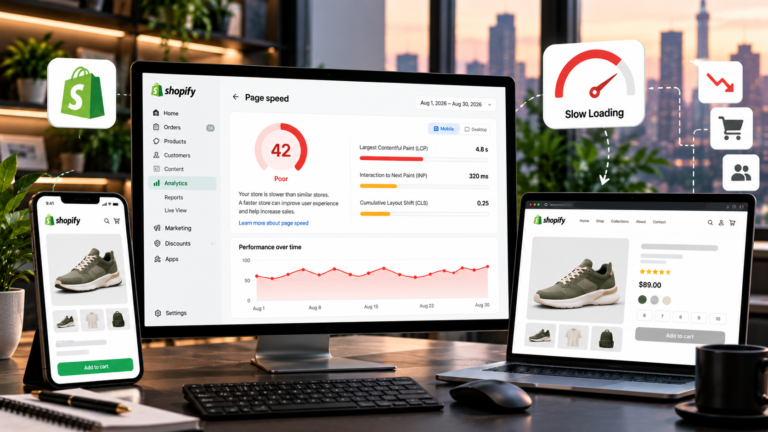
Heavy imagery, unnecessary scripts, excessive apps, poor theme implementation, video backgrounds, tracking technology, and custom functionality can all affect performance.
Shopify’s recent analysis found a relationship between storefront loading performance and conversion, while also making clear that factors such as pricing, marketing, and product-market fit continue to influence sales.
The goal should not be to chase a perfect performance score at the expense of useful business functionality.
Instead, development should balance design, features, tracking, and performance so that the store remains both useful and fast.
Checkout Should Feel Easier Than the Decision to Buy
Once a customer reaches checkout, they have already shown strong purchase intent.
This is not the moment to introduce confusion.
Unexpected shipping charges, unclear delivery times, limited payment methods, unnecessary account creation, long forms, or a lack of trust can all cause customers to stop before completing the purchase.
Shopify’s 2026 checkout guidance identifies extra costs, slow delivery, security concerns, forced account creation, complex checkout, and insufficient payment options among common reasons shoppers abandon the process.
That means checkout optimization is not only a design issue.
It can involve shipping strategy, payment infrastructure, customer communication, localization, and the technical configuration of the store.
A customer should reach checkout with fewer questions than they had when they first arrived.
More Features Do Not Always Create a Better Store
One common mistake in eCommerce development is adding functionality simply because it is available.
More pop-ups.
More apps.
More sliders.
More upsells.
More animations.
More widgets.
Every feature adds something to the customer experience, but it can also add complexity.
The important question is not:
“Can we add this?”
It is:
“Does this help the customer buy?”
A high-converting eCommerce store often feels simple because the complexity has been handled carefully behind the scenes.
The best experience guides customers toward the right action without making them think about how the website works.
Traffic and Website Performance Need to Work Together
A good website cannot grow without qualified traffic.
But strong advertising cannot compensate forever for a weak website.
This is where many businesses waste marketing budget.
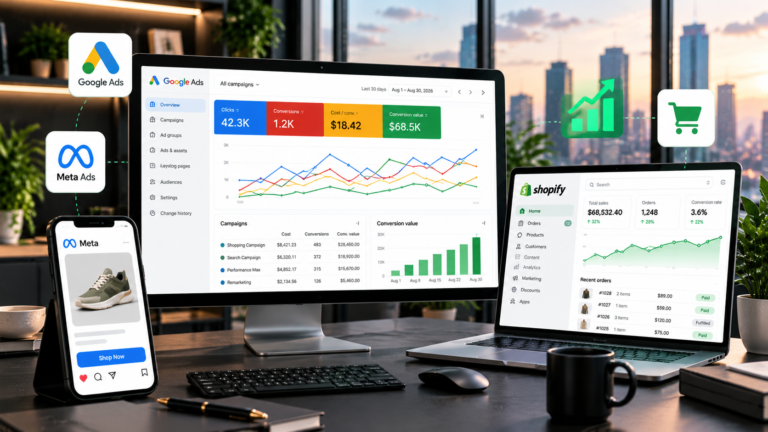
They increase Meta or Google Ads spend because they want more sales, while the existing website is already losing a large percentage of the visitors it receives.
The opposite can happen as well.
A business may invest heavily in redesigning its store when the real issue is poor traffic quality or an offer customers do not want.
The website and marketing strategy need to be evaluated together.
Advertising brings the visitor.
The website has to turn that visitor into a customer.
A High-Converting Store Is Built Around the Business
There is no universal eCommerce template that produces the highest conversion rate for every company.
The right structure depends on the products, audience, traffic sources, price point, brand positioning, payment requirements, customer questions, shipping model, and growth strategy.
A low-ticket impulse product might need a very different buying journey from a premium product that requires significant consideration.
This is why effective eCommerce development starts with understanding the business before deciding how the website should look.
Design should support the strategy.
Not replace it.
Frequently Asked Questions
What makes an eCommerce website high converting?
A high-converting store makes it easy for qualified visitors to understand the products, trust the business, navigate the site, find the information they need, and complete checkout with minimal unnecessary friction.
Can a website redesign increase eCommerce sales?
Yes, when the redesign addresses real problems in the customer journey. Changing colors, layouts, or visual styles without understanding the conversion problem does not guarantee better results.
Why does my eCommerce store get traffic but few sales?
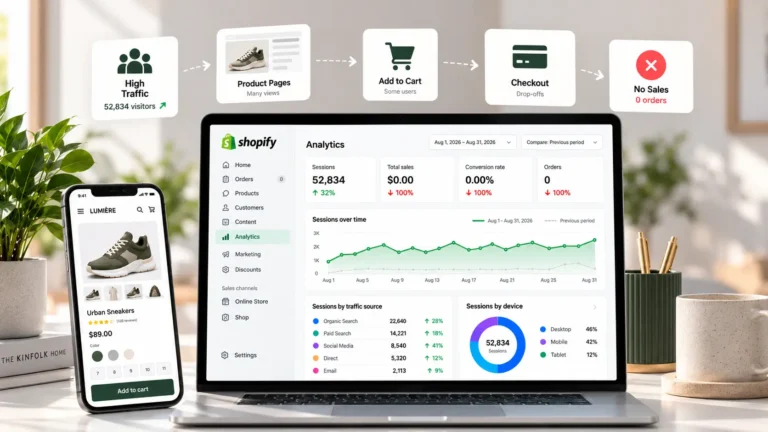
The cause can include traffic quality, product positioning, pricing, weak product pages, poor mobile usability, slow performance, trust issues, checkout friction, or payment problems. The full journey should be reviewed before deciding what needs to change.
Planning a New eCommerce Website or Redesign?
A high-performing eCommerce store should not be built around appearance alone.
It should connect development, UX, conversion strategy, performance, payments, and customer acquisition into one system.
Aktive Online LLC helps businesses build and improve Shopify and WordPress/WooCommerce stores with the complete customer journey in mind.
Whether you are launching a new store, redesigning an existing website, or getting traffic without enough sales, our team can review the business requirements and identify what your eCommerce experience actually needs.
Planning an eCommerce website or concerned that your current store is not converting? Book a free strategy call with Aktive Online LLC and let our team review the right direction for your business.
Comments