


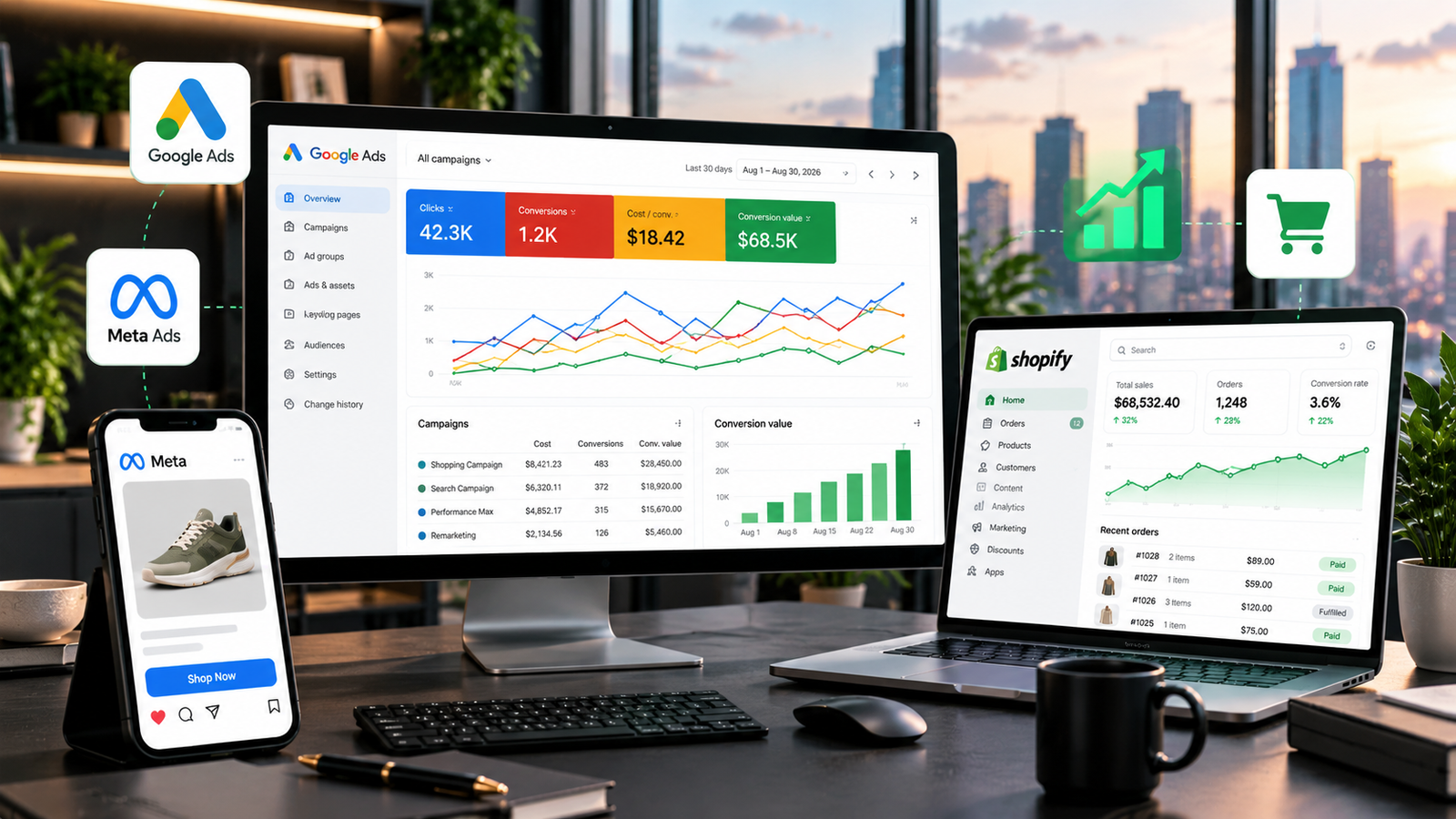
Running paid ads for an eCommerce business is easy.
Running them profitably is much harder.
A strong eCommerce PPC strategy is not simply about launching Google Ads, Meta Ads, or TikTok campaigns and increasing the budget when sales appear. The real goal is to understand which traffic is profitable, which customers are worth acquiring, where money is being wasted, and whether the store can convert paid traffic efficiently.
This is where many eCommerce brands struggle.
They may be spending consistently on advertising but still cannot answer a simple question:
Are our ads actually creating profitable growth?
Why More Ad Spend Does Not Always Mean More Growth
When an advertising campaign starts generating purchases, increasing the budget can feel like the obvious next step.
But scaling an inefficient system usually makes the inefficiency larger.
A campaign might generate revenue while still producing weak profit after advertising costs, product margins, discounts, shipping, returns, and other expenses are considered.
The same problem appears when businesses focus only on metrics such as clicks, impressions, or platform-reported ROAS.
Those numbers are useful, but they do not explain the entire business.
A successful eCommerce PPC strategy should connect advertising performance with what is happening after customers reach the website.
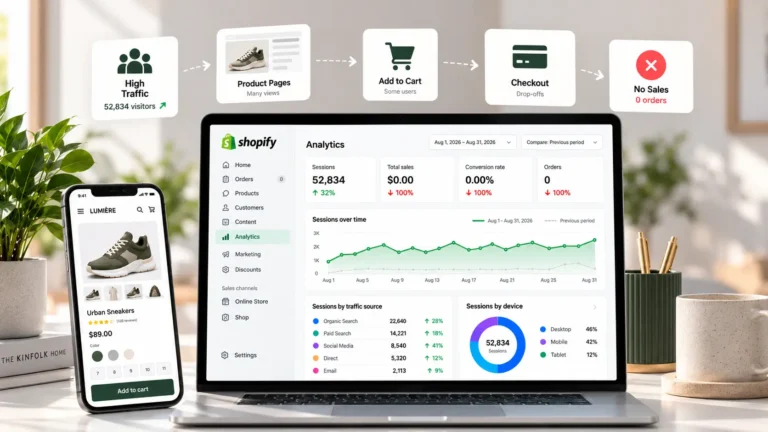
If people are clicking but not purchasing, the issue may be the campaign.
It may also be the product page, offer, pricing, mobile experience, checkout, shipping information, payment setup, or overall trust in the store.
Increasing the budget before understanding the real problem can simply increase wasted spend.
The Right Advertising Platform Depends on the Business
There is no single PPC platform that works best for every eCommerce store.
Google Ads can be powerful when customers are actively searching for products or solutions.
Meta Ads can help brands introduce products to potential customers through Facebook and Instagram.
TikTok can create additional opportunities for products that work particularly well with strong visual and creative content.
But the right channel depends on factors such as your product, price, customer behavior, existing demand, margins, creative assets, previous advertising data, and growth stage.
A brand with a product people already search for may require a very different strategy from a new brand selling something customers have never seen before.
This is why copying another company’s advertising structure rarely produces the same results.
The strategy needs to be built around the economics and buying journey of the individual business.
Tracking Has to Be Reliable Before You Scale
Paid advertising decisions depend heavily on data.
If purchases are not being tracked correctly, revenue is being duplicated, important events are missing, or different advertising platforms are claiming the same customer, it becomes difficult to know what is actually working.
A business may reduce spending on a profitable campaign because the tracking is inaccurate.
Or it may increase the budget on a campaign that appears successful inside an advertising dashboard but is not creating the same level of real business value.
Modern advertising platforms increasingly use conversion data and value signals to optimize campaign delivery. That makes the quality of the data being sent back to those systems even more important.
Before aggressively scaling PPC, businesses should be confident that their advertising accounts, website analytics, purchase tracking, and eCommerce data are aligned.
Otherwise, important budget decisions may be based on incomplete information.
Your Store Is Part of Your PPC Strategy
Paid advertising does not stop when someone clicks the ad.
That click is only the beginning of the conversion journey.
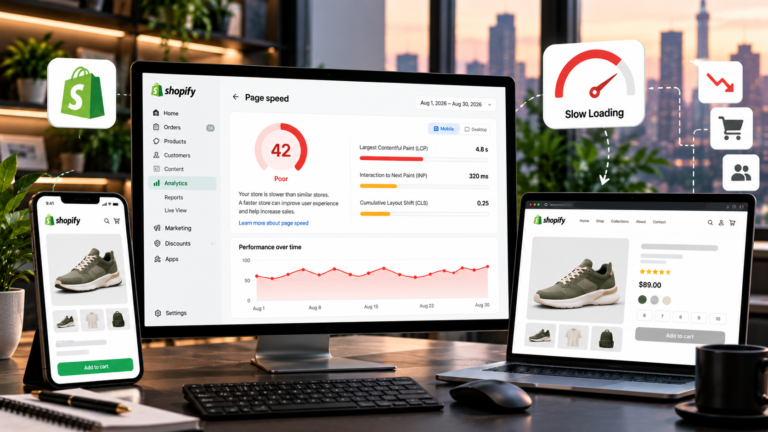
A strong campaign can still perform poorly if customers arrive on a slow, confusing, or unconvincing website.
For an eCommerce store, conversion can be affected by product presentation, pricing, reviews, mobile usability, page speed, shipping information, checkout friction, and available payment options.
This is why performance marketing and website optimization should not be treated as completely separate activities.
If the ads are attracting the right customers but the website is losing them, changing the campaign alone may not solve the problem.
Likewise, redesigning a store will not fix poor targeting or weak advertising creative.
Both sides need to work together.
At Aktive Online, this is an important part of how we approach eCommerce growth. We look beyond the advertising account and consider what happens throughout the customer journey.
Profitability Matters More Than Cheap Traffic
A cheap click is not automatically a good click.
A low cost per purchase is not automatically a profitable purchase either.
The real value of advertising depends on what happens financially after the sale.
Businesses should understand factors such as customer acquisition cost, average order value, product margin, repeat purchases, refunds, and the amount they can realistically afford to spend to acquire a customer.
For example, two stores may both spend $50 to acquire a customer.
That $50 could be highly profitable for one business and completely unsustainable for another.
Without understanding the economics behind the campaigns, advertisers can easily optimize for the wrong outcome.
The goal of PPC should therefore be more than generating conversions.
It should be acquiring the right customers at a cost the business can sustain.
Scaling Should Happen After the System Works
Scaling eCommerce advertising is not simply increasing a daily budget.
As spending grows, audience quality can change, acquisition costs can rise, creative can lose effectiveness, and weaknesses in the store become more expensive.
That is why successful scaling usually requires the complete system to remain healthy.
The advertising account needs reliable tracking.
The offer needs to remain competitive.
The creative needs ongoing attention.
The website needs to convert.
And the business needs enough margin to support higher customer acquisition costs when they occur.
If one of those areas begins to fail, increasing spend may reduce profitability rather than increase it.
This is where experienced performance management becomes valuable.
Instead of reacting to individual numbers inside an ad platform, the business needs to understand how the different parts of its acquisition system are affecting one another.
Frequently Asked Questions
What is eCommerce PPC?
eCommerce PPC is paid advertising used to attract potential customers to an online store through platforms such as Google, Meta, and other advertising networks. Businesses generally pay for traffic, impressions, or campaign outcomes depending on the platform and campaign type.
How much should an eCommerce business spend on PPC?
There is no universal advertising budget. The appropriate amount depends on margins, product pricing, customer acquisition economics, existing data, business goals, and how efficiently the store converts traffic.
Why are my ads getting traffic but not sales?
The problem can come from targeting, creative, the offer, pricing, tracking, or the website itself. The entire customer journey should be reviewed before assuming the advertising platform is the only issue.
When should an eCommerce business scale its ads?
Scaling generally makes more sense once tracking is reliable, the business understands its acquisition economics, campaigns are producing meaningful results, and the store is capable of converting additional traffic efficiently.
Spending on Ads Without Seeing Profitable Growth?
If your business is investing in paid advertising but the results are inconsistent, increasing your budget may not be the answer.
The real problem could exist in the campaigns, tracking, creative, website, conversion experience, or the way all of these systems work together.
Aktive Online LLC helps eCommerce businesses review and manage the complete performance marketing journey—from paid acquisition and tracking to landing pages, conversion optimization, and store performance.
Instead of focusing only on clicks or dashboard numbers, our goal is to identify what is limiting profitable growth and build the right strategy around your business.
Running eCommerce ads but not getting the growth you expected? Book a free strategy call with Aktive Online LLC and let our team review your current performance marketing setup.

Comments